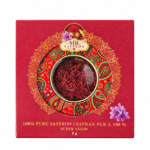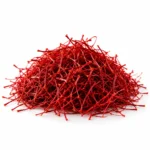

Saffron and anxiety have become an active area of scientific interest. Saffron (Crocus sativus L.) is known worldwide as a culinary spice, but researchers have also investigated its potential effects on mood, stress and anxiety-related symptoms.
Several randomized controlled trials and recent meta-analyses have investigated saffron or standardized saffron extracts in adults experiencing anxiety symptoms. Some results are encouraging, but the evidence is not completely consistent.
Saffron should not be considered a cure or a replacement for professional treatment for anxiety disorders. This article reviews what current clinical research shows, what remains uncertain and why culinary saffron should not be confused with standardized research extracts.
Saffron and Anxiety: Why Are Scientists Studying It?
Saffron contains naturally occurring compounds including crocin, crocetin, safranal and picrocrocin. Researchers have investigated whether some of these compounds may influence biological pathways related to mood and stress, including neurotransmitter signalling, oxidative stress and inflammatory processes.
Possible mechanisms are scientifically interesting, but they do not prove that saffron treats an anxiety disorder. Human clinical trials are needed to determine whether meaningful benefits actually occur.
For an introduction to the spice itself, see our guide: What Is Saffron?
What Does the Latest Research Show?
A 2026 systematic review and meta-analysis evaluated 34 randomized controlled trials involving 1,769 participants. When anxiety was measured with the Beck Anxiety Inventory, saffron supplementation was associated with a statistically significant reduction in scores.
However, the same analysis did not find a statistically significant effect on the Hamilton Anxiety Rating Scale, a clinician-rated measure. The overall certainty of evidence was rated as moderate.
This difference matters. It suggests that saffron may show benefits on some self-reported anxiety outcomes, but the evidence is not uniform across all measurement methods.
What Have Individual Clinical Trials Found?
A randomized, double-blind, placebo-controlled trial published in 2016 included 60 adults experiencing anxiety and depression. Participants received either saffron capsules or placebo for 12 weeks.
The researchers reported greater improvements in Beck Anxiety Inventory and Beck Depression Inventory scores in the saffron group. Although the findings were encouraging, the study was relatively small, so it should be interpreted as one piece of a larger body of evidence rather than definitive proof.
What About Stress and Low Mood in Otherwise Healthy Adults?
A 2017 randomized placebo-controlled study investigated a standardized saffron extract in 128 adults who reported low mood but were not diagnosed with depression. Over four weeks, the higher saffron dose used in the study was associated with improvements in some measures of negative mood, stress and anxiety compared with placebo.
These findings cannot automatically be applied to people with generalized anxiety disorder, panic disorder or other diagnosed anxiety conditions. Study population matters when interpreting clinical research.
How Does Saffron Compare With SSRIs?
A 2025 meta-analysis examined randomized trials comparing saffron preparations with selective serotonin reuptake inhibitors (SSRIs). Across four studies reporting anxiety outcomes, the analysis found no statistically significant difference between saffron and SSRIs in reducing anxiety symptoms.
This result does not mean saffron should be treated as interchangeable with prescription medication. The available studies remain limited in number and size, and the saffron preparations used in clinical trials are not necessarily equivalent to culinary saffron.
Is Culinary Saffron the Same as the Saffron Used in Research?
Not necessarily. Many clinical trials use standardized saffron extracts manufactured to contain controlled amounts of particular saffron compounds. These products are administered under specific research protocols.
That is different from adding saffron threads to rice, tea, desserts or other foods. Results from a standardized extract should not automatically be interpreted as evidence that an ordinary culinary serving will produce the same effect.
How Much Saffron Has Been Used in Research?
Clinical studies have used different products and amounts. Some research has investigated standardized extracts around 28–30 mg per day, while other trials have used different preparations and protocols.
These numbers describe research methods, not a recommendation for self-treatment. Concentration and composition vary among products, and anyone considering saffron supplements for a health condition should discuss this with a qualified healthcare professional.
Can Saffron Replace Anxiety Medication?
Current evidence does not support independently replacing prescribed anxiety medication with saffron.
Anxiety disorders vary in severity and may require psychological therapy, medication, lifestyle interventions or a combination of treatments. Anyone receiving treatment should speak with their healthcare provider before stopping medication, changing a dose or adding a concentrated herbal supplement.
What Are the Limitations of the Research?
- Small studies: many individual trials include relatively few participants.
- Different populations: some studies involve diagnosed conditions while others involve stress or low mood in otherwise healthy adults.
- Different preparations: whole saffron, standardized extracts and isolated compounds are not equivalent.
- Different anxiety measures: recent evidence shows significant results on some scales but not others.
- Short study periods: many trials last only several weeks.
So, Can Saffron Help With Anxiety?
The most scientifically accurate answer is that research suggests saffron and standardized saffron extracts may have potential effects on some anxiety symptoms, but current evidence is not sufficient to consider saffron a proven treatment for anxiety disorders.
Larger, longer and independent trials are still needed to clarify which preparations may be useful, which groups may benefit and how the effects compare with established treatments.
Explore More Saffron Research
Frequently Asked Questions
Does saffron cure anxiety?
No. There is currently insufficient evidence to say that saffron cures anxiety or anxiety disorders.
Has saffron been tested for anxiety in humans?
Yes. Several randomized controlled trials have investigated saffron preparations and anxiety-related outcomes in humans.
Is saffron tea proven to reduce anxiety?
No. Many clinical studies use standardized saffron preparations, so their findings cannot automatically be applied to saffron tea or normal culinary servings.
Can saffron replace anxiety medication?
No. Prescribed medication should not be stopped or replaced without guidance from a qualified healthcare professional.
References
- 2026 systematic review and meta-analysis of 34 randomized controlled trials.
- 2016 randomized placebo-controlled trial of saffron in anxiety and depression.
- Meta-analysis comparing saffron with SSRIs for depression and anxiety.
- Randomized trial of a standardized saffron extract in adults with self-reported low mood.
Medical Disclaimer: This article is for educational and informational purposes only. It is not intended to diagnose, treat, cure or prevent anxiety or any other medical condition and should not replace advice, diagnosis or treatment from a qualified healthcare professional.