
Saffron brings a distinctive aroma, golden colour, and flavour to food. But if you have searched for saffron side effects, you may be wondering whether this spice is safe, how it differs from concentrated supplements, and who should be cautious. The short answer: ordinary culinary use and medicinal-dose supplementation are not the same exposure.
Key takeaway: Saffron used in normal food quantities is generally considered well tolerated. Concentrated extracts and repeated high-dose use may carry additional risks, particularly for people taking medication or during pregnancy. This article is educational and does not replace personalized medical advice.
What Are the Possible Saffron Side Effects?
A systematic review of clinical research reported that gastrointestinal complaints were the most commonly documented adverse events during saffron interventions, generally mild and self-limiting. Other reported events varied across studies, and not every symptom observed during a trial was necessarily caused by saffron.
- Digestive discomfort, such as nausea or stomach upset, particularly with supplement use.
- Possible allergic reactions in susceptible individuals.
- Potential interactions with medicines or other products, particularly when taking concentrated extracts.
- Uncertainty about the effects of extended, higher-dose use.
When discussing saffron side effects, it is important to remember that safety data come mainly from clinical trials involving medicinal or supplemental use. They should not be interpreted as a prediction of side effects from adding a few threads to rice or tea.
Is Saffron Safe in Normal Cooking Amounts?
Saffron has a long history of culinary use. A recent systematic review distinguishes conventional dietary quantities from therapeutic doses studied in trials, and describes ordinary food use as generally safe on the available evidence. Exact amounts vary between dishes; there is no need to treat a recipe serving as a medical dose.
For everyday preparation, see our guide to using saffron in cooking and saffron rice recipe.
Saffron Spice vs Saffron Supplements: Why the Difference Matters
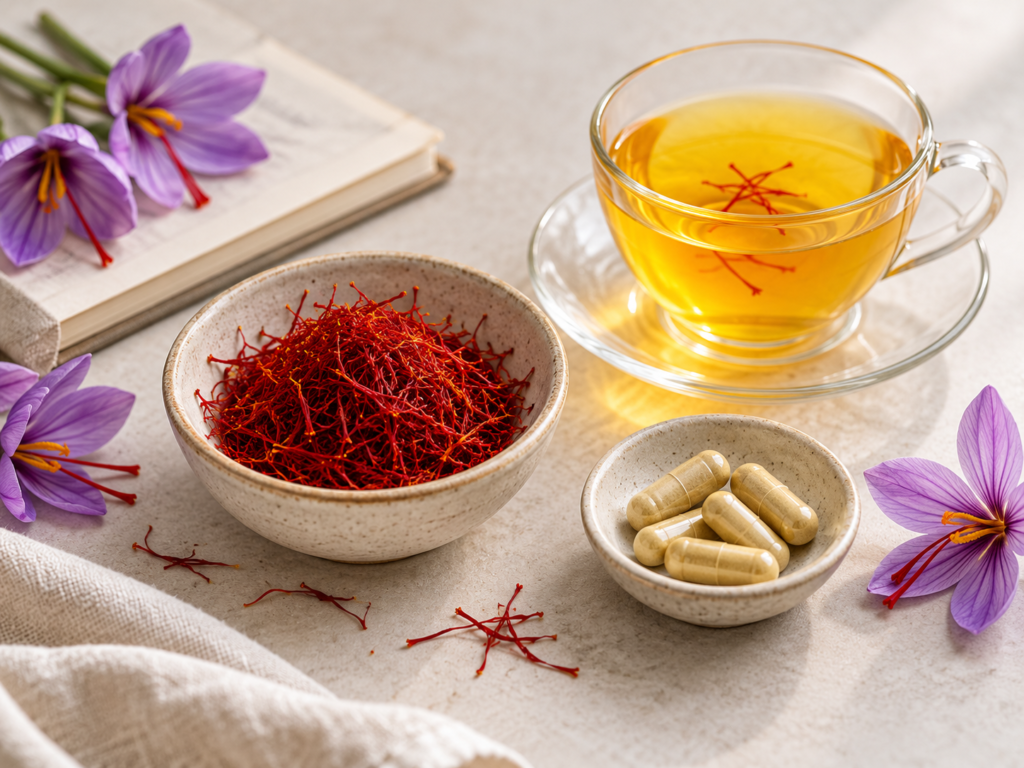
When evaluating saffron side effects, a pinch of threads added to a recipe is not equivalent to a capsule, standardized extract, or high-dose herbal product. Research on potential health effects frequently examines preparations and amounts that differ substantially from culinary use. Do not assume that a finding about an extract applies to saffron in food, or vice versa.
In Canada, natural health products are subject to their own regulatory framework. Health Canada advises consumers to look for a Natural Product Number (NPN) or DIN-HM on authorized products and follow their labels. A culinary spice is not automatically a licensed natural health product.
Saffron During Pregnancy and Breastfeeding
Pregnant and breastfeeding people should avoid self-prescribing medicinal or high-dose saffron supplements without guidance from a qualified healthcare professional. Safety evidence for these groups is limited. Questions about consuming saffron as part of a normal meal are best discussed with a prenatal care professional, especially when pregnancy is high risk.
Can Saffron Interact With Medications?
Potential interactions matter most when saffron is used as a supplement. A systematic review highlighted particular caution for people using anticoagulant or antiplatelet medicines, and for those with certain psychiatric conditions. Evidence is incomplete and individual risks depend on the product and the person. Ask a pharmacist or clinician before starting concentrated saffron if you take prescribed medicines.
Never stop or adjust prescribed treatment because of a claim made about saffron.
Saffron Side Effects: Who Should Be Especially Careful?
- People who are pregnant or breastfeeding, particularly considering supplements.
- Anyone taking blood-thinning medicines or several medications.
- People with a serious medical condition or a history of allergic reactions.
- Children and individuals considering concentrated herbal supplements without clinical advice.
How to Choose Saffron for Cooking in Canada
For cooking, choose saffron clearly labelled as a culinary spice, check storage and packaging information, and buy from a seller that explains what you are purchasing. Be wary of sellers promising cures or guaranteed therapeutic results.
Read how to choose saffron in Canada, how to tell if saffron is real, and what saffron is. MR SAFFRON focuses on premium saffron for culinary enjoyment—not on treating or preventing disease.
Frequently Asked Questions
Can saffron cause stomach upset?
Gastrointestinal symptoms were among the most commonly reported adverse events in studies of saffron interventions, typically involving supplemental or medicinal use. Ordinary cooking amounts are a different exposure.
Is saffron safe to drink every day in tea?
Safety depends on the quantity, preparation, individual health, and medications. Culinary saffron tea is not the same as taking a concentrated extract daily. Ask a healthcare professional if you intend to use it for a health effect.
Is more saffron always better?
No. Increasing an ingredient beyond what a recipe calls for does not guarantee more benefit and can increase exposure. Follow culinary recipes rather than supplement-dose claims.
Can I use saffron instead of medication?
No. Saffron is not a substitute for prescribed treatment or professional medical care. Speak with your healthcare provider about any symptoms or treatment questions.
Is saffron safe during pregnancy?
There is insufficient safety evidence to recommend medicinal-dose saffron supplements during pregnancy. Discuss specific food and supplement questions with your prenatal care team.
The Bottom Line
Saffron is a prized culinary ingredient, and its ordinary use in food is generally well tolerated. Most published safety research concerns supplements or medicinal preparations rather than a few strands in a meal. If you are pregnant, take medication, have a health condition, or are considering high-dose products, seek individualized medical guidance.
References and Further Reading
- Adverse Events of Saffron (Crocus sativus L.): Systematic Review of Current Evidence
- Health Canada: About Natural Health Products
- Health Canada: Safe Use of Natural Health Products
Medical disclaimer: This article provides general information only and is not medical advice. Seek care promptly for severe or unexpected reactions.